















































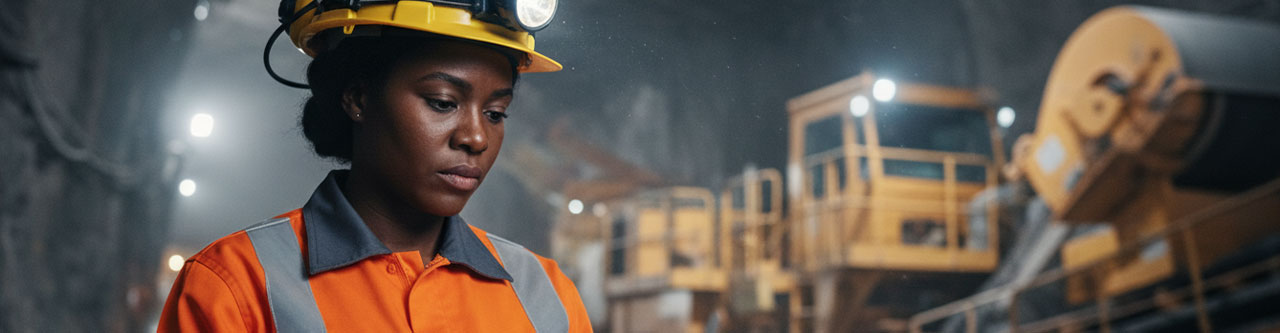
Gearing up for the next generation of mining innovation
Global mining is making great strides in terms of digital transformation. However, in South Africa, more modernisation and digital innovation are needed to help mining organisations overcome key challenges such as reduced profitability, safety concerns and the need to operate more efficiently and sustainably.
Bolstering SA’s economic backbone
According to the Minerals Council South Africa, the mining sector remains the backbone of the country’s economy, last year contributing R477 billion or 6.2% to GDP, exporting R816 billion worth of minerals and generating a total of R124 billion in taxes for the fiscus.
Equally importantly, mining employed 470 457 people, with each of these jobs supporting 10 more jobs in the mineral value chain and ancillary industries.
However, there is still a great deal of room for growth. The Northern Cape, for example, is positioned as South Africa’s next mining hub due to its rich rare earth resources. With potentially billions of rands in untapped resources, advanced prospecting and mining technologies could help unlock significant economic growth and job creation in the province.
The Minerals Council also notes that modernisation and innovation are needed for the industry to be more resilient and productive, safer, more sustainable and more globally competitive.
Modernisation and advanced digital technologies will also be crucial in helping South Africa, and other African countries, to capitalise on growing demand for rare earth minerals and those that are crucial for renewable energy systems, such as copper, cobalt, lithium, nickel, graphite and uranium.
AI in mining
AI is arguably the most transformative technology to impact the mining sector in recent years.
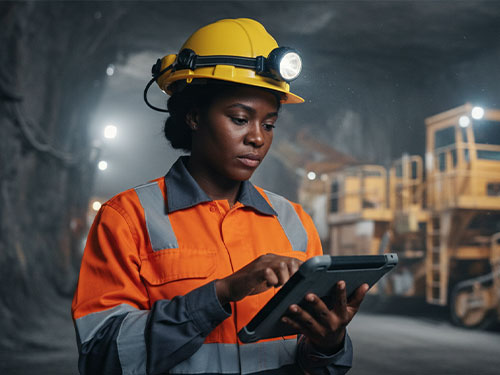
AI is enhancing efficiencies and reducing costs across mining operations, from exploration and extraction through to supporting autonomous operations and improving safety. With AI-equipped drones, mining enterprises can support aerial surveys and enhance security, while AI analysis can predict safety and maintenance issues and identify production bottlenecks. AI has been credited with driving measurable reductions in maintenance costs, operational expenses and accident rates.
In the DRC, for example, the government is leveraging AI in exploration, aiming to unlock over $24 trillion in untapped minerals. Ghana and Botswana are also using AI in mineral prospecting, while in Burundi, AI is helping to identify high-grade deposits and accelerate copper production.
It’s not surprising then that uptake is escalating. According to Precedence Research, the market for AI in mining topped around $35.47 billion last year and is expected to soar to $50.33 billion in 2026 and over $828.33 billion by 2034.
Data as a competitive advantage
While AI offers solutions to a multitude of mining challenges, successful AI depends entirely on the data available to the AI models. Quality, trusted data is the foundation of any AI initiative.
Mining has never lacked data; however, the sector often lacks the ability to transform that data into coordinated action across increasingly complex operations.
For mines to optimise the value of data and make measurable improvements using AI, they must improve their ability to capture data from sensors and workflows across sites. Mines must ensure that they can make systems work together under conditions shaped by fragmented operational environments, inconsistent connectivity, latency sensitivity and strict safety requirements.
They must also ensure that they can process and store their data securely and cost-effectively and enable proper data governance and quality assurance. This means they need to have the right infrastructure, digital strategy and governance in place.
Connecting the dots
Mines have to modernise their operations to be more competitive. However, the next generation of mining competitiveness will not be determined solely by who deploys the most AI.
It will be determined by who most effectively integrates connectivity, intelligence and execution into a single operating model, in other words, who can achieve operational intelligence at scale.
Creating connected, intelligent mining environments requires three distinct capabilities: connectivity that links people, equipment, sensors and operational systems, digital platforms that unify and manage data across the operation and integration expertise that ensures intelligence is embedded into operational workflows. BCX enables these capabilities and helps optimise mining operations.
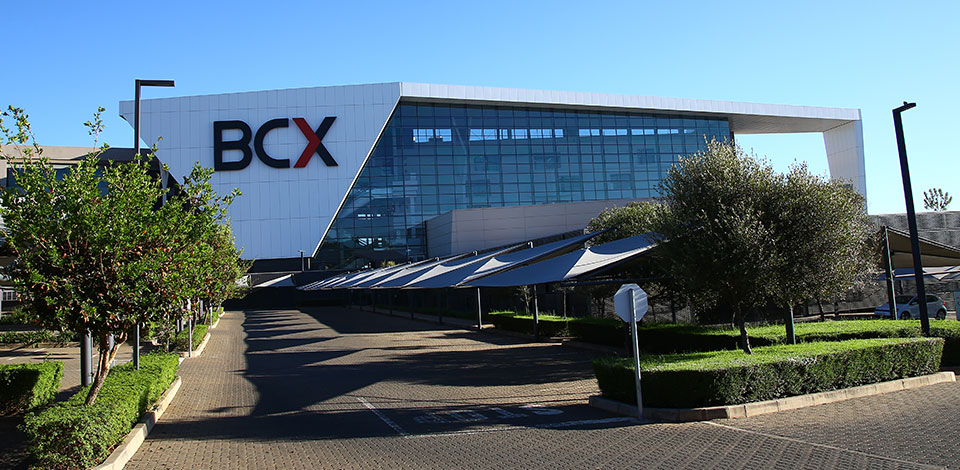
BCX is a trusted strategic partner for South African mining enterprises, helping them become more connected, intelligent, secure and future-ready through AI, cloud, cybersecurity, data and intelligent infrastructure solutions. With BCX, mining operations are increasing efficiency, reducing costly downtime and safeguarding every worker while helping make all operations smarter through real-time decision-making.