















































Mining 5.0: The next big goal for SA’s mines
While many sectors are still getting to grips with Industry 4.0, the age of Industry 5.0 is already dawning.
In the EU, the Industry 5.0 vision for European industry goes beyond efficiency and productivity, redefining the role of industry as a driver of both economic and societal progress while leading the green and digital transitions. In Industry 5.0, human wellbeing and empowerment, sustainability and resilience are as important as profits and efficiency.
South Africa’s mining sector has long prioritised sustainability and community wellbeing. However, in a Mining 5.0 era, the sector will have to up the ante. In a resource-constrained future, there will be greater scrutiny of every organisation’s renewable energy, waste and water management, approaches to land rehabilitation and ethical community engagement.
The International Council on Mining and Metals (ICMM) notes that mining and metals have a profound, cross-cutting influence on multiple UN Sustainable Development Goals (SDGs). As such, the organisation outlines key focus areas for responsible mining, including eliminating fatalities and building a strong safety culture, reducing Scope 1 emissions through vehicle solutions and accelerating Scope 3 reductions, safe and responsible tailings management, nature-positive outcomes across operations and supply chains, and improving social outcomes through better human rights, skills development and community engagement.
Sustainability through technology
Digital solutions are crucial for supporting mining ESG goals and energy efficiency. Intelligent energy management harnessing IoT sensors, automation and AI ensures that energy use is optimised and emissions reduced. IoT sensors, satellite imagery and AI-driven platforms monitor emissions and raise early alerts if certain levels are exceeded.
Advanced monitoring solutions track slope stability, tailings dams and waste. Sensor-based sorting equipment separates valuable residual minerals from waste before disposal, improving profitability and reducing environmental impact.
Distributed fibre optic networks become digital nervous systems for underground environments to support fire, ventilation and environmental monitoring.
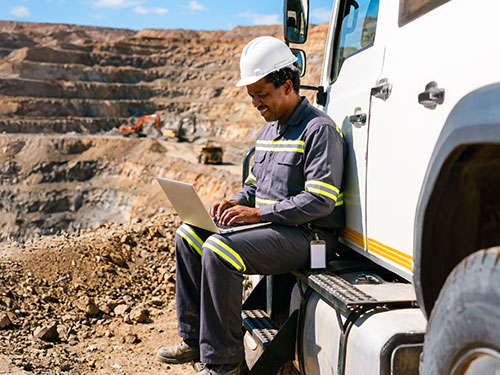
Geotechnical sensors and AI track ground movement, rock stress and water pressure to give early warnings and improve worker safety. Telemetry and automation, and even AI-enabled blasting, take humans out of high-risk areas, placing autonomous heavy equipment and robots in their place. Digital twins and interactive 3D environments enable virtual reality training for safer workplaces.
Connectivity is key
To harness the solutions that take mines into a more sustainable 5.0 era, they have to ensure they have the right connectivity, digital infrastructure and applications to support automation, AI and IoT systems. Networks must be rugged, reliable and secure, offering low latency, uninterrupted connections between a growing fleet of IoT systems and data-processing platforms. In areas using autonomous equipment, networks must have the ability to collect, process and analyse vast amounts of IoT data in real time to avoid downtime and safety risks.
Mines must be able to integrate disparate data from various systems into a unified environment, where security and low latency are prioritised, while also controlling the costs of data storage, ingress and egress. They also need effective data management and governance mechanisms, with multi-layered security, and identity and access control to ensure resilience as mission-critical processes become digitised and data-driven.
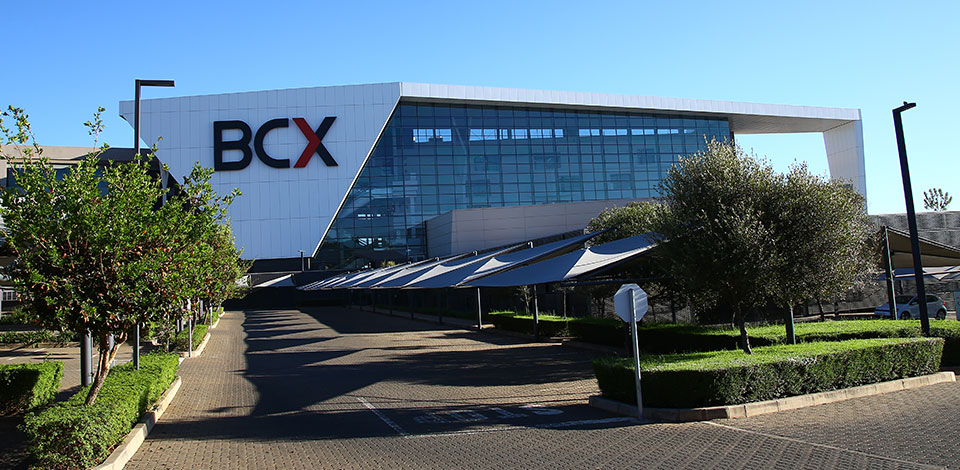
BCX is a strategic partner helping South African mining enterprises become more connected, intelligent, secure and sustainable through AI, cloud, cybersecurity, data and intelligent infrastructure solutions.